The list grows. The conversations don’t.
Every year adds names to your phone: a classmate, a neighbour, someone from that one trip. Then you open your messages and it’s the familiar few, again.

Reignite the Flames of Renaissance.
Neo Renaissance studies how psychology and systems thinking can turn complex knowledge into practical tools for human life. We look for the relationships that make things work, and build from there.
PL. I · H. F. Füger, Prometheus Brings Fire to Mankind, c. 1817

PL. II · Raphael, The School of Athens (detail), c. 1511

PL. III · Pieter Bruegel the Elder, Children’s Games, 1560
We have hundreds of people in our contact lists, yet we often speak to the same few. Not necessarily because we don’t care about the others, but because choosing whom to contact becomes a habit of its own.
Every year adds names to your phone: a classmate, a neighbour, someone from that one trip. Then you open your messages and it’s the familiar few, again.
Close friends, family, work, old school. It feels organised. But a group is only a shorter list, and we still reach for the same names inside it.
Sometimes, the obstacle isn’t a lack of people to talk to. It’s the act of choosing. And when we choose, habit quietly chooses for us.
Randomly introduces chance into the process, helping people reconnect with old friends and widen their social circles.
Randomly chooses someone from the group you’re in. Then call, send a WhatsApp, or skip and choose again.
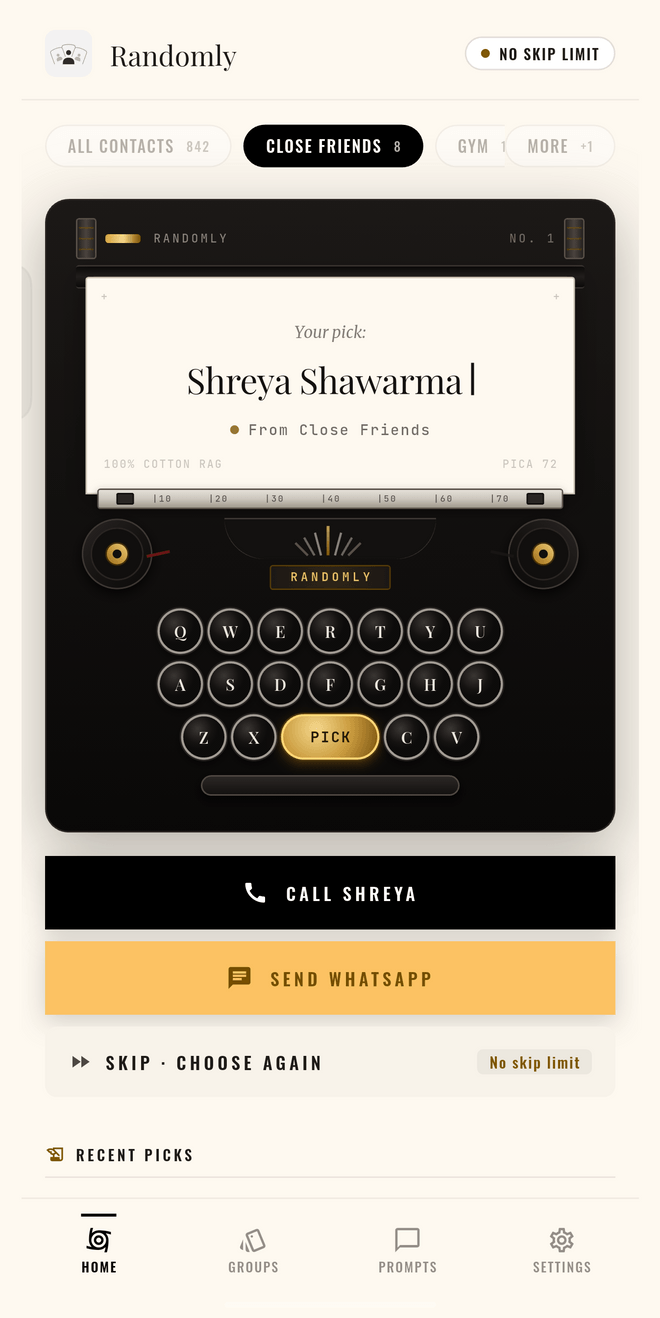
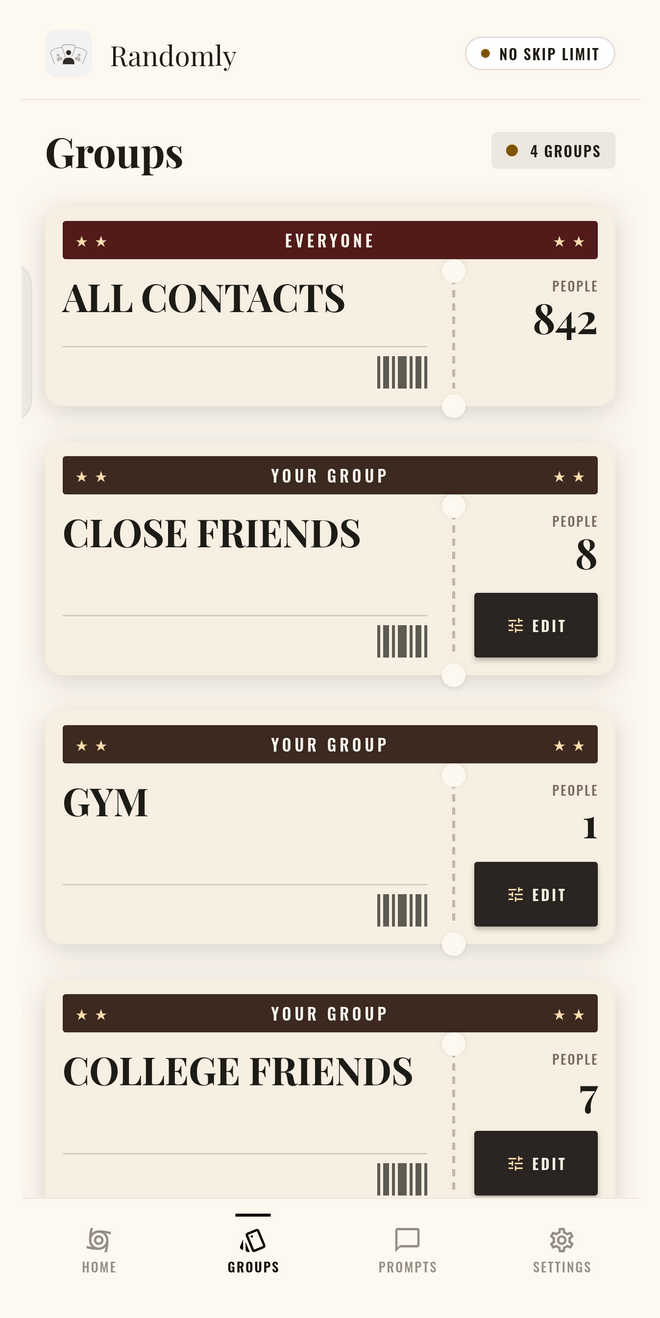
Pick from all your contacts, or from groups you make yourself: close friends, the gym, college friends.
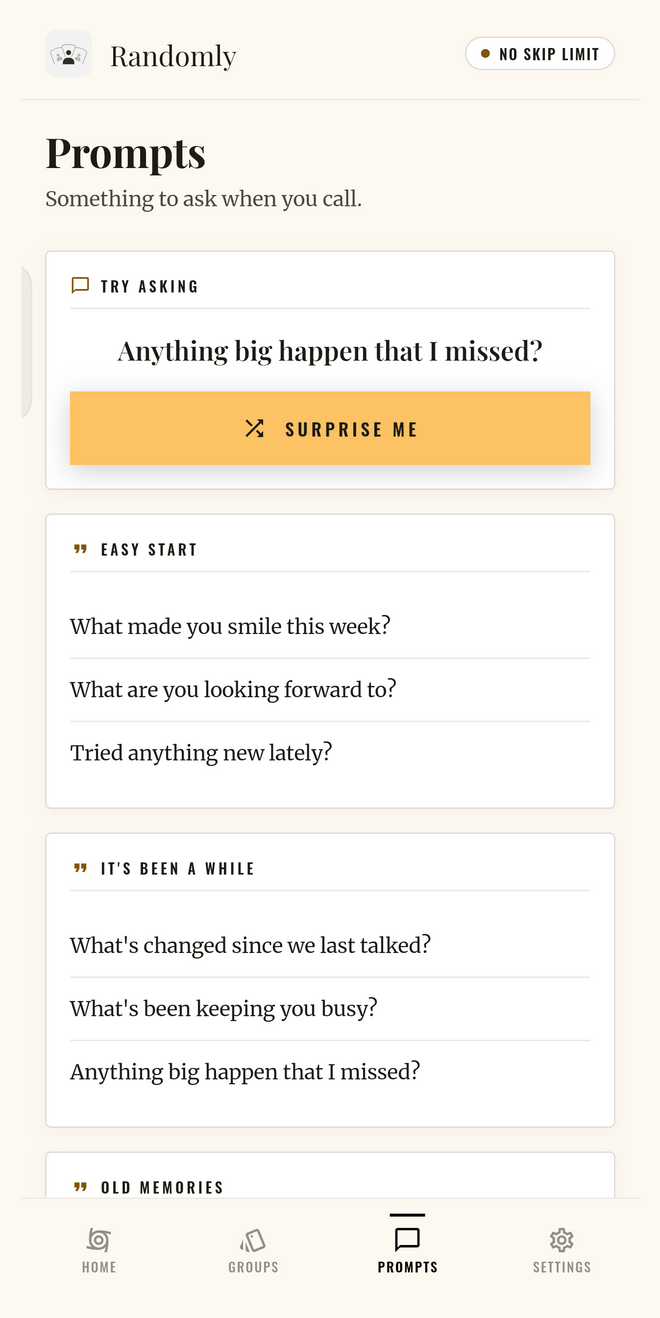
Questions for an easy start, for when it’s been a while, and for old memories.
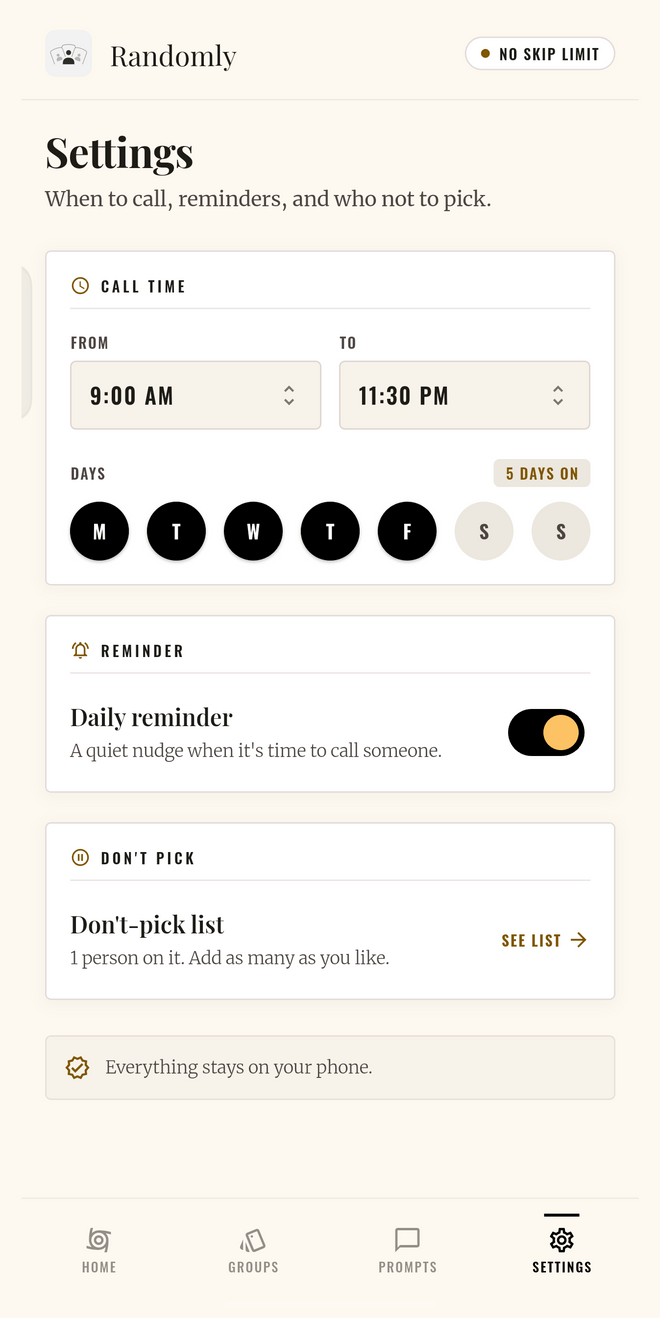
Set your hours and days, turn on a quiet daily nudge, and keep a don’t-pick list. Everything stays on your phone.
{{ netCaption }} {{ netCount }}
An everyday habit, gently interrupted. Randomly leaves the choosing to chance, so reconnecting can start without a decision.
PL. IV · Raphael, The School of Athens, c. 1511
Most problems come with solutions.
That's what makes them problems, not predicaments. Yet some are too complex for our minds to solve, while others needn't be solved by our minds at all. Our time, attention, and brainpower are limited. So why spend them on things that could be handled by something else?
A calculator, for instance, doesn't make us less intelligent. It frees us from spending our mental energy on calculations, allowing us to use it for something more meaningful.
At Neo Renaissance, we build metaphorical calculators for problems that shouldn't have to occupy our minds. We take complex knowledge and turn it into systems that are practical, executable, and easy to use.
We believe the mind should be free to wander, wonder, and create, without being constantly interrupted by unnecessary friction.
Our mission is to create a world with less friction, so the mind can spend less time figuring things out and more time doing something meaningful with them.
Neo Renaissance studies how psychology and systems thinking can turn complex knowledge into practical tools for human life.
We build metaphorical calculators: small systems that take unnecessary friction off the mind, so it can be spent on something meaningful. Randomly is the most recent.